
Bluecoat adhesives in Kanpur
Pidilite’s premium white glue range, stocked alongside the boards at our Kalpi Road counter — including D3, one of the few grades on our shelf whose water resistance is set by a published standard instead of being described on the label. We are authorised dealers.
Open Monday to Saturday
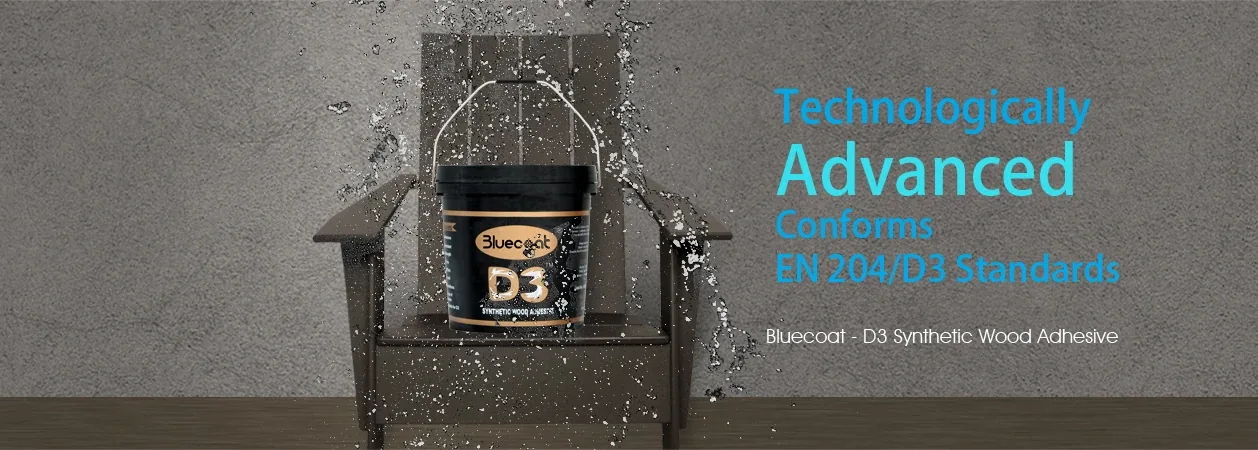
Bluecoat’s own line for D3 is the claim this page is about: not that the glue is strong, but that a named standard says how strong, and in what conditions.
What Bluecoat is.
A white glue brand that built its name in the trade on its own, and has been part of Pidilite since 2014. We hold it as authorised dealers, on the same counter as Fevicol.
A Pidilite brand since 2014
Bluecoat started out in 2001 as an independent adhesive maker and built a following among carpenters and furniture workshops. Pidilite bought the adhesive business in 2014 to strengthen its premium white glue range, and it has been sold under that roof since.
Not a second version of Fevicol
The two ranges sit side by side rather than one replacing the other. Fevicol is the name the whole trade knows; Bluecoat is the white glue range kept alongside it, and the grades are not simply the same products with different labels.
A working range
Synthetic resin wood adhesives for board and joinery work, and rubber based contact adhesives for laminate. Between them they cover most of what a carpenter does in a day.
Known for D3
The grade that gets asked for by name is D3, because of what it says on the bucket: conforms to EN 204/D3. That claim is the subject of the next section.
A grade you can look up.
Adhesive buckets are covered in words — marine, waterproof, heat proof, premium, ultimate. Not one of those words has a definition behind it. Anybody may print any of them on any tin, and they do. EN 204 is different: it is a published standard, and D3 is a class within it.
-
What EN 204 actually is
A European standard that sorts non-structural wood adhesives into four durability classes, D1 to D4, by how much water the glue line will take before it lets go. The classing is done by testing the bonded joint to EN 205 — pulling it apart after specified soaking and conditioning — not by anyone’s opinion of the product.
-
Where D3 sits
D3 is the class for interior work that meets water often but briefly, and for sheltered exterior work. In an Indian house that is the kitchen, the wash area and the utility — splashing, wiping, steam — rather than standing water.
-
Why a class beats an adjective
Two buckets can both say waterproof and behave nothing alike, and neither maker has told you anything you can check. A D3 claim names a standard and a class, so it can be looked up, compared with the next tin, and held against the maker.
-
And D3 is not a magic word either
D3 is not D4, which is the class for tougher water exposure. It is a non-structural adhesive, meant for furniture, panelling, doors and windows — not for anything carrying a load. The point is not that D3 is the best number. It is that it is a number at all.
-
The rest of the range is described, not classified
We would rather say this than let you assume it: Bluecoat’s other wood adhesives — Aqua, Marine, Plus, 9000 — are sold on the same trade language as everyone else’s. They are good adhesives and we stock them. Only D3 carries the EN 204 class, and only D3 gets that argument made for it here.
What we stock.
The Bluecoat grades held on the floor, and the work each one is meant for.
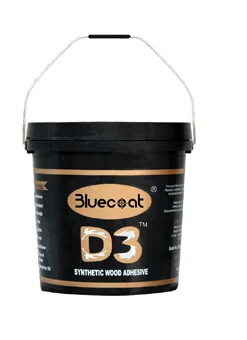
Bluecoat D3
The cross-linking grade, placed by the maker in the D3 class of EN 204. For furniture, panelling, doors and window lamination, and for board and laminate work where splashing is part of the room.
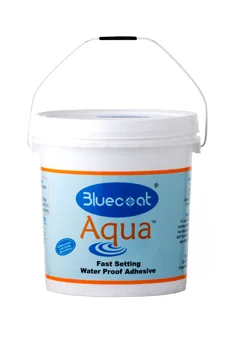
Bluecoat Aqua
Fast setting, and the grade the maker puts forward for water resistance and creep resistance. Cold press and hot press work, board to board, and board to laminate or veneer.
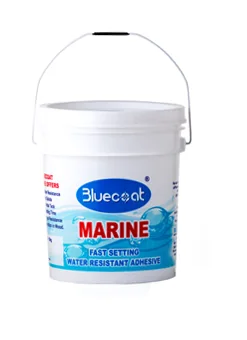
Bluecoat Marine
Fast setting with high initial tack, which is what you want holding a sheet on a vertical face while you work along it. Heat and fungal resistant.
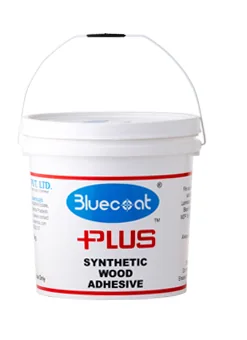
Bluecoat Plus
The quicker-bonding grade, bought by workshops where the press turning round faster is the whole point. All the usual board and laminate work.
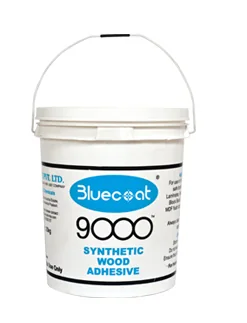
Bluecoat 9000
The everyday synthetic wood adhesive for ordinary dry joinery — ply, MDF, particle board, laminate and veneer, and the paper and card work a workshop picks up along the way.
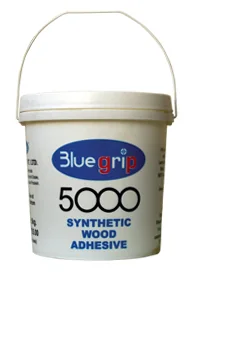
Bluegrip 5000
Bluecoat’s other wood adhesive line, for ply, laminate, veneer, block board and MDF bonded to each other, and for wooden flooring work.
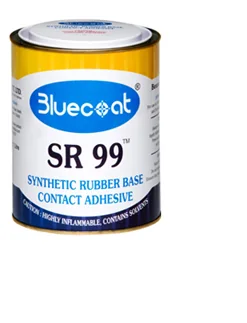
Bluecoat SR 99
Rubber based contact adhesive for laminate and for the surfaces a wood glue will not hold — rigid PVC, metal, leather and board. Made without benzene.
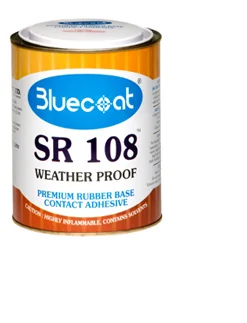
Bluecoat SR 108
The heat resistant contact adhesive, for laminate near cooking and for the jobs where a press or a clamp cannot reach. Dries quickly.
Bluecoat or Fevicol?
Both are Pidilite ranges and we are authorised dealers for both, so we have no reason to push one over the other. They answer different questions, and the honest split is easy to describe.
-
If your carpenter asked for Fevicol, buy Fevicol
An adhesive the man on the job already knows gets mixed, spread and pressed the way it is meant to be. That is worth more than a specification argument, and it costs you nothing to go with it. The Fevicol range is here.
-
If you want the durability class in writing, D3
For a specified job, an architect’s drawing, or a customer who wants to know what they are getting, a named EN 204 class is something you can put on paper and defend later.
-
For a workshop buying in quantity
Bluecoat is sold in larger packs across its range, which suits a press running all day more than it suits one wardrobe. Tell us the scale and we will say which line works out better.
-
Contact adhesive is more about the day’s stock
For sticking laminate, the choice between one rubber based tin and another is usually availability and rate on the day. Ask us what is on the floor.
-
The board still decides the job
No adhesive of any class rescues a board that should never have gone into a wet room. Get the board right first — BWP plywood or a boiling water proof panel — then match the glue to it.
Where it’s used.
Board work, laminate work, and the joinery in between.
Furniture and panelling
Carcasses, internal structures, shelving and wall panelling — the work EN 204 was written for.
Doors and windows
Door lamination and window joinery, where the frame takes weather at one face and room air at the other.
Lamination on board
Decorative laminate and veneer onto plywood, MDF, HDHMR and particle board, by hand or in a press.
Edges and joints
Edge bonding, finger jointing and post-forming work in a workshop. The cutting and pressing is the carpenter’s or fabricator’s work, not the store’s — we supply what it is done with.
Why buy it here.
The same terms whether it is one bucket or a workshop’s month.
-
Stocked with the boards
The ply, the laminate, the beading and the adhesive on one bill and one delivery, so nobody makes a second trip for the cheapest item on the list.
-
Authorised dealer for both ranges
Bluecoat and Fevicol held on the same counter as a dealer, so the comparison above can be made with both buckets in front of you rather than from a website.
-
Retail and bulk
One bucket for a job at home or a standing order for a workshop — neither is treated as a nuisance.
-
Delivered to your site
Kanpur city, Kanpur Dehat, Unnao, Fatehpur and the belt around them. Mention the site when you ask for a rate.
-
Told which one you need
Describe the surface and the room and we’ll name the grade — including when the plainer, cheaper bucket is the right answer.

Bluecoat
A Pidilite brand, held in depth alongside the Fevicol range. See all our brands
Adding Bluecoat to the order?
Send the product, pack size and quantity — or just the surface and the room — and the rate comes back on WhatsApp the same day.